What Cat Litter Works Best With Automatic Litter Boxes?
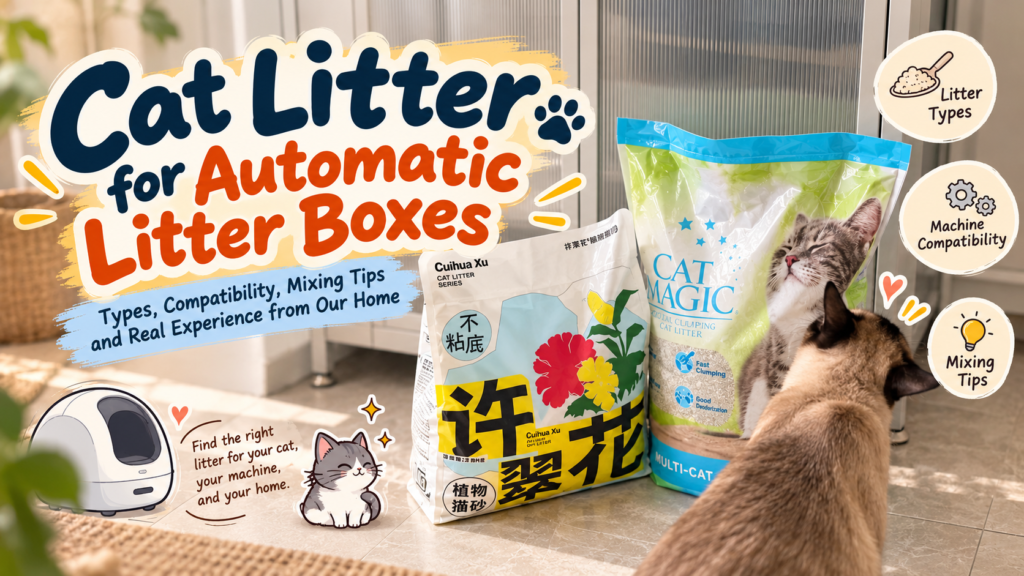
The best fit starts with what your machine allows and the problem you need the litter to solve. Work through these checks in order:
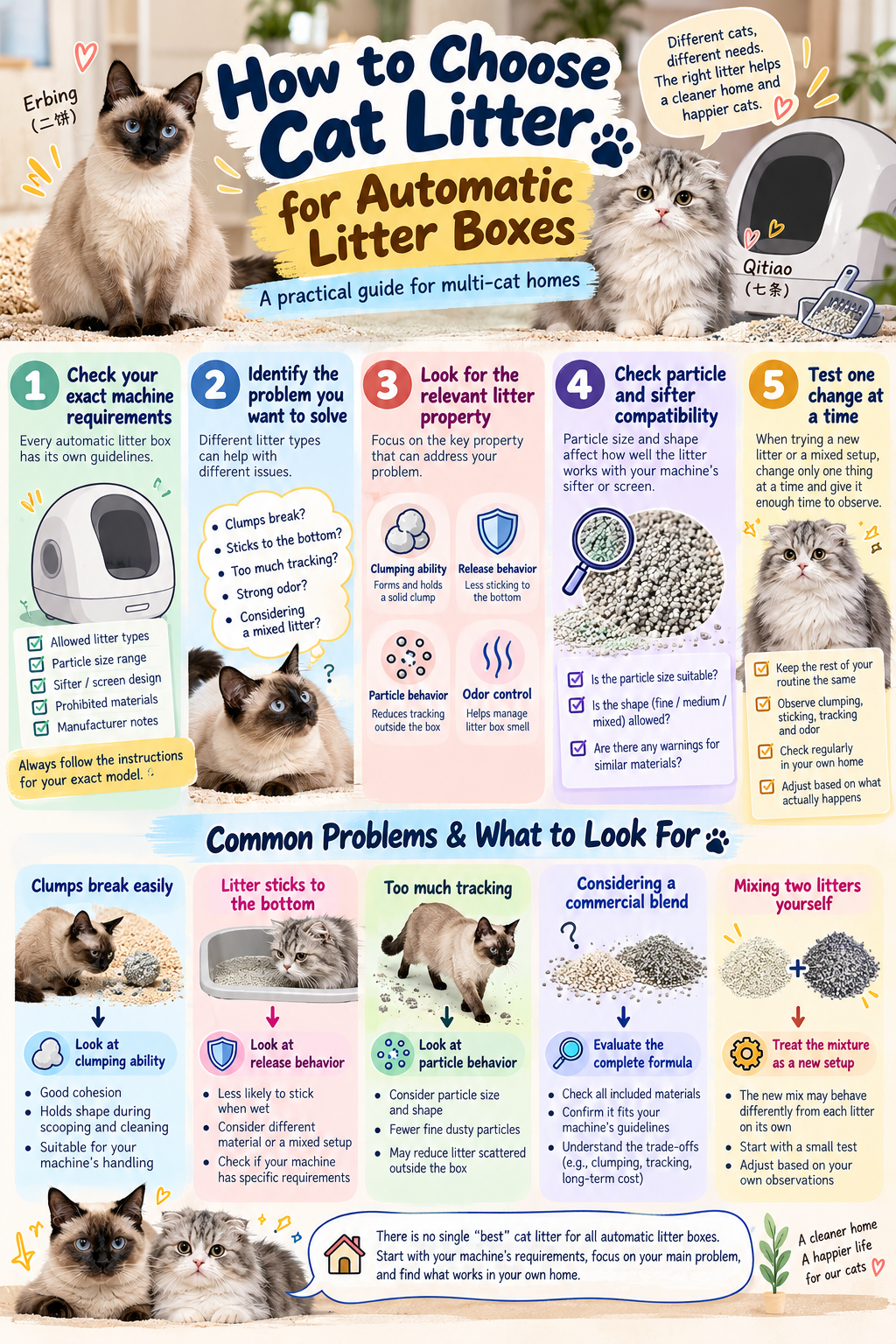
- Machine compatibility: confirm permitted materials and any restrictions for your exact model and screen.
- Clump formation and cohesion: for a clump-sifting box, look for clumps that form in time and stay together during cleaning.
- Release: pay attention to sticking and residue, even when clumps look well formed.
- Particle and sifter behavior: check that clean particles suit the installed sieve, including their size and shape.
- Dust and carry-out: assess airborne dust separately from grains brought onto the floor.
- Cat acceptance: the choice needs to work for each cat using the box.
- Household practicality: weigh the remaining cleanup and ongoing cost alongside performance.
A single formula may meet those needs. Mixing is an option to investigate when a particular weakness remains, rather than a necessary upgrade. Start with the problem; choose the solution before the product or ratio.
What an automatic litter box needs from litter
For a machine that removes urine clumps, litter has three jobs: form a clump, hold together through cleaning, and release from the bed or liner. Each job matters. “Fast-clumping” addresses only part of the decision.
The cleaning delay matters too. Whisker’s guidance explains that more time can help clumps form, while a shorter delay removes waste sooner. Check the settings available for your model rather than borrowing a waiting time from another setup.
The particles also have to suit the cleaning mechanism. A small granule and a long pellet may behave differently at a screen, even if both products clump. PETKIT’s separate tofu and clay sifters for the Purobot Ultra are one example of why the installed accessory matters.
A box built around absorbent crystal trays follows a different workflow. Check whether your system needs removable clumps or a specified absorbent litter before comparing materials.
How the main litter types compare
Use this table to see what to check for each type. It summarizes published compatibility guidance, not MultiPetLife laboratory tests. Clumping, release, dust and tracking depend on the particular formula and setup.
| Litter type | Defining behavior | What to check | Automatic-box caution |
|---|---|---|---|
| Clumping bentonite / clay | Clumping format recommended for several sifting designs | Formation at your cycle delay, cohesion, release and dust | Follow fill limits and standard/lightweight requirements |
| Tofu | Forms include granules and pellets | Particle length, shape and permitted formula | Some sifters support tofu; some machine instructions exclude it and tofu-containing mixes |
| Commercial blends | Multiple components in one formulation | Ingredients, particles and cleaning-cycle behavior | Check approval for the whole blend, not just its ingredients |
| Other plant-based clumping formulas, including cassava | Different materials with different formulations | The particular material, clump behavior and screen fit | Confirm machine support beyond the plant-based label |
| Silica / crystal | Non-clumping absorption in some tray systems | Tray, particle and optical-sensor requirements | Use only where permitted; not a general clumping-litter substitute |
| Absorbent wood / paper pellets | Pellet formats can be non- or loose-clumping | Whether the mechanism is designed to handle that format | Cited Litter-Robot guidance excludes these pellets; check other wood formats separately |
The clay and pellet distinctions follow Litter-Robot 3’s filling guidance. Dust and carry-out are worth checking for every row: neither a material label nor a change in grain size answers both questions. Ohio State’s Indoor Pet Initiative also notes that many cats prefer fine-grained, unscented litter, so keep cat acceptance in the decision.
For a broader US buying comparison, see our guide to cat litter types, brands and products.
Choose based on the problem
Once a litter meets the machine’s requirements, focus on the part of the routine you want to improve. A clump that forms quickly but sticks calls for different checks from clean grains being dumped into the waste bin.
| Main problem | Look for | Check first | Watch out for |
|---|---|---|---|
| Sticking | Cohesion plus easier release | Fill guidance, liner condition and delay | A firm clump may still leave a stuck patch |
| Wet clumps | Formation suited to the cleaning time | Whether the model allows a different delay | Waiting longer leaves waste present longer |
| Broken clumps | Cohesion through the cleaning motion | When breakage occurs and time allowed to set | Fast formation and sifting strength are different |
| Noticeable dust | Formula-specific dust information | Filling versus operation | Bigger particles alone do not prove lower dust |
| Excessive carry-out | Suitable particles and acceptable floor behavior | Screen restrictions and the exit area | Coarser particles may fail the screen check |
| Clean litter in the waste bin | Correct separation | Fill level, sifter and cleaning mode | Check equipment causes before changing the mixture |
| Odor | A response matched to the source | Bed, fresh waste or waste compartment | Improving clumping may leave another odor problem untouched |
For clean-litter loss, Whisker’s LR4 troubleshooting lists overfill, unsuitable litter and accidental Empty-cycle activation. Those checks belong to that model, but the useful decision is broader: investigate the cause before assuming another bag of litter will solve it.
Why the exact machine matters
Official guidance can vary by model, accessory and page. Neakasa’s M1 support article excludes tofu-containing mixes; its general guide discusses them favorably, and its FAQ combines an exclusion with advice to reduce tofu’s proportion.
Whisker’s guide lists plant-based exceptions alongside broader FAQ cautions. PetSafe’s older crystal-tray manual is narrower than its reusable-tray guidance.
Check the instructions for the exact machine, screen or sifter, and litter formula you plan to use. Include prohibited materials and particle limits. If pages conflict, ask support before choosing a mixture.
Can mixing litter help?
Mixing may be part of a household solution when one formula leaves a particular need unmet. Give the idea a clear purpose: easier release, more reliable clumps, manageable floor mess or a routine you can afford to maintain.
Two products’ advertised strengths cannot simply be added together. The resulting mixture still has to form, sift and release as a whole. A commercial blend is a particular formulation too; a similar homemade ratio still needs its own checks.
Before considering a mixture, check the permitted materials, complete product formulas, particle sizes, sifter and machine mechanism. Keep a permanent performance blend separate from temporarily combining old and new litter during a transition. They serve different purposes.
Mixing strategies worth considering
These strategies help define what you want a change to accomplish. One suitable formula may meet the same needs without mixing.
| Strategy | Goal | What to assess | Trade-off or limit |
|---|---|---|---|
| Address one specific weakness | Keep what you like while tackling sticking, weak cohesion or carry-out | Does it address the weakness while keeping clumping, release and dust acceptable? | Assess each outcome separately |
| Balance performance and ongoing cost | Retain a satisfactory routine within a household budget | Spending, actual use, cleanup and noticeable clean-litter loss | Cheaper ingredients alone do not show total cost or performance |
| Consider the complete particle mix | Keep the resulting bed suitable for screening and for the cats | Ingredients and particle shapes against screen and mechanism requirements | Familiar ingredients still need a whole-mixture check |
For the first strategy, choose one priority: a clump that holds together but sticks calls attention to release; a clump that forms but breaks calls attention to cohesion. Treat these as separate targets rather than expecting every benefit from both bags.
For the cost strategy, decide which outcomes you want to preserve. Sticking and cost shaped my own routine together, as the household example below shows.
For the particle strategy, assess the mixture the machine actually handles. Watch for clean grains in the waste bin, broken clumps or a changing balance of particles in the bed. Check cat acceptance as well. These are observations to make, not predictions that every mixture will fail. If an ingredient is prohibited, choose an allowed option instead.
What I use at home
This is how those sticking and cost decisions played out in my own home. I use small-particle cassava litter with very fine bentonite litter. CatMagic, the bentonite I use, looks almost sand-like; the cassava, 许翠花, has slightly larger particles. I began mixing late in my CATLINK ownership and continued into my current automatic-box setup.
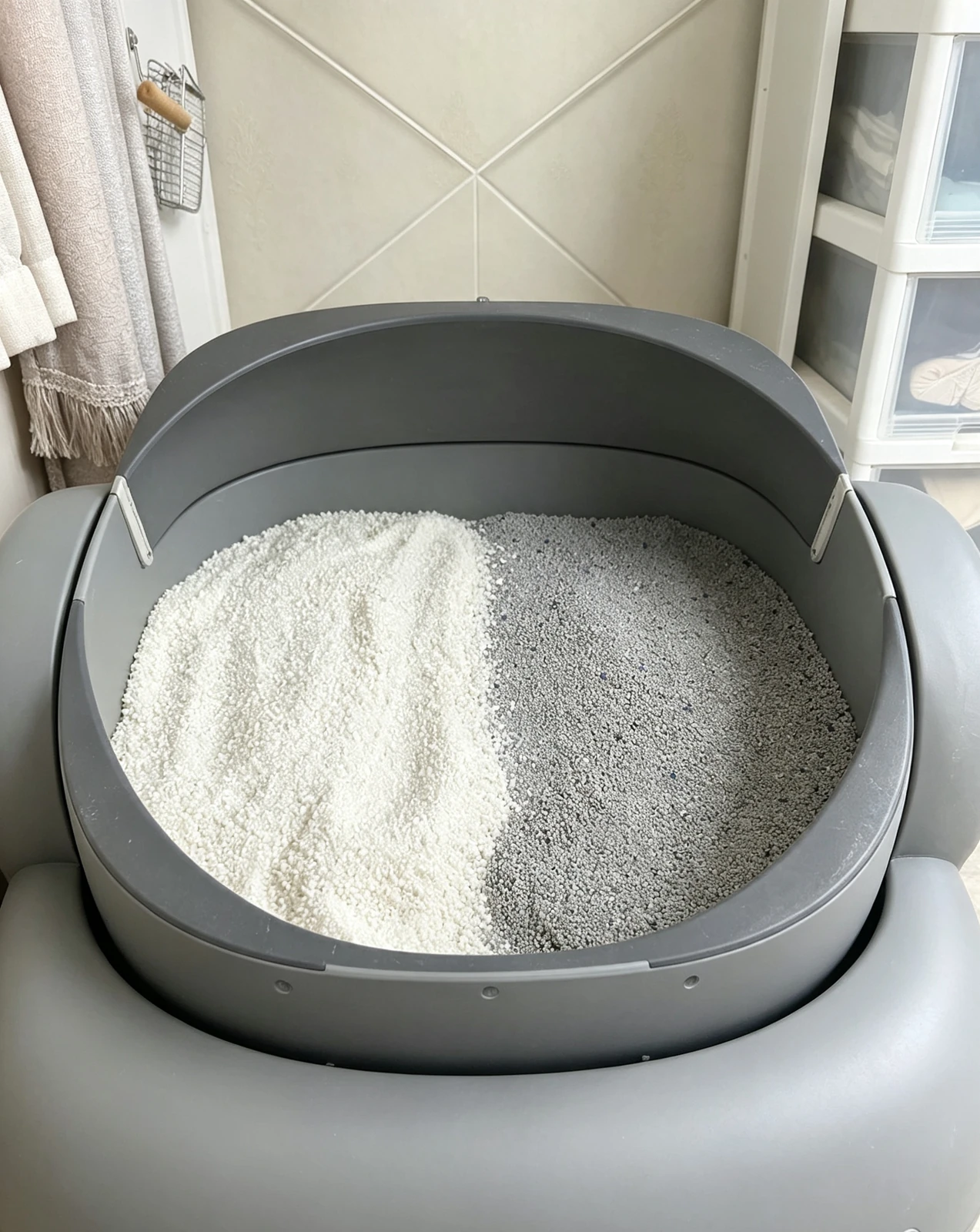
I wanted less sticking and a manageable ongoing cost. The cassava litter cost noticeably less than CatMagic in my own use. I add roughly 1:1 by feel, without weighing or measuring cups. This is an example, not a formula.
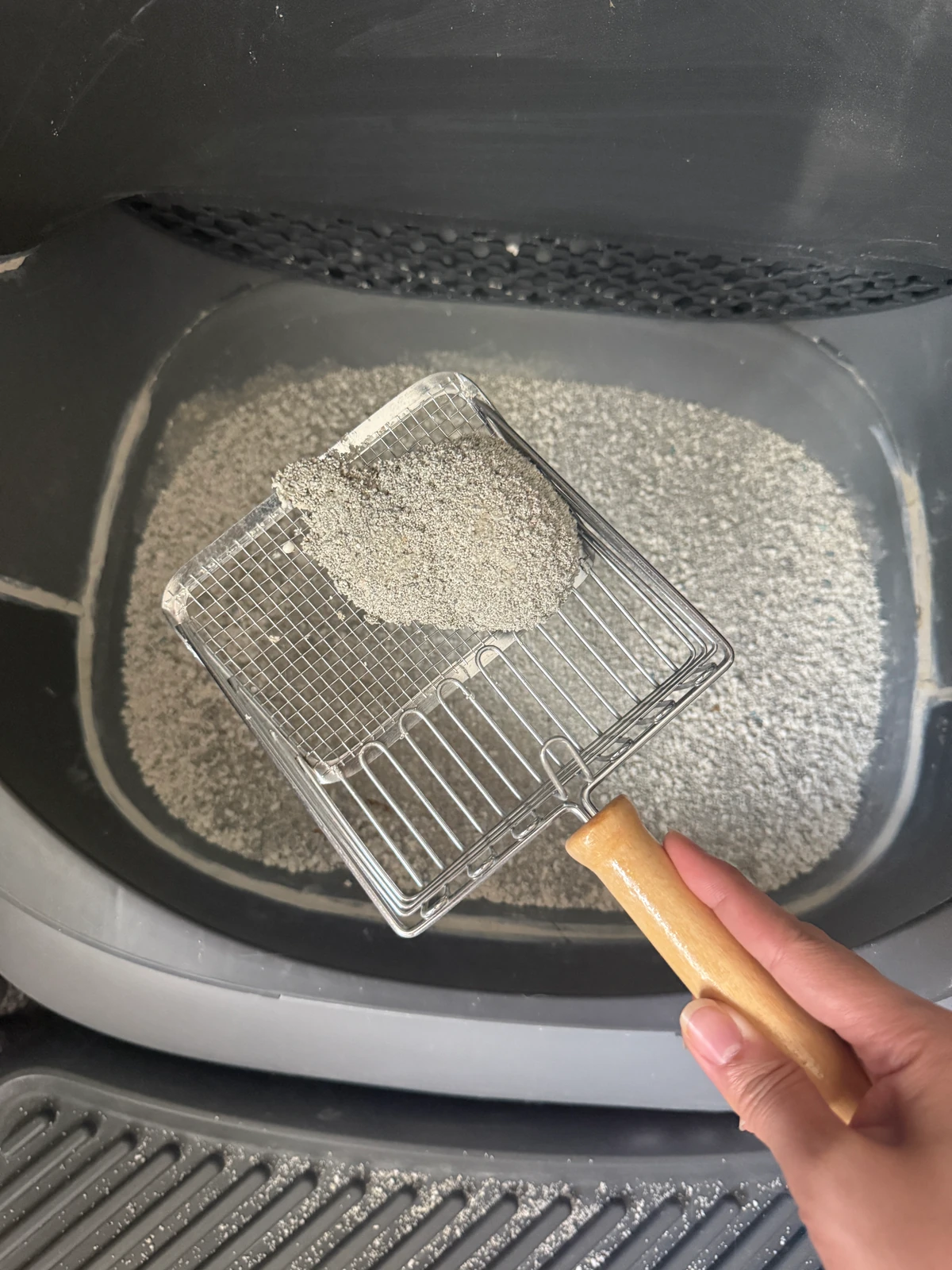
In my experience, clumps form quickly, are rarely obviously wet, and usually stay intact. I have not noticed large amounts of clean litter being discarded with them. Compared with CatMagic alone, I noticed less sticking after adding the cassava litter.
The way the box moves the litter also matters. In a regular tray, I find the cassava’s effect more noticeable when it stays at the bottom, where the layer is easier to maintain. In my automatic setup, rolling and sifting remix the litter, so I cannot depend on a permanent cassava bottom layer.
Stable layering in a regular litter box is different from the remixing environment inside my automatic box. I still notice an overall improvement in sticking, even though the ordinary-tray layering idea does not carry over in the same way.
Odor remains noticeable. For me, the routine has addressed the clumping and sticking concerns while leaving that trade-off unresolved. These are observations from my setup. Its exact hardware and screen specifications remain unconfirmed, so check your machine’s requirements rather than treating my routine as an approved match.
What mixing still leaves you to do
A better-looking clump leaves dust and carry-out to assess separately. Persistent odor still needs its source identified. Mixing also leaves waste disposal, equipment care and surrounding-floor cleanup to manage; my guide to the cleaning work automatic litter boxes still leave behind covers that remaining workload.
For your own setup, start with the main problem, confirm the machine requirements and decide which property matters next. Compare the result against that goal, the cats’ acceptance and the work and cost left over. A useful choice solves the problem your household actually needs to solve, even when it leaves other trade-offs to manage.